
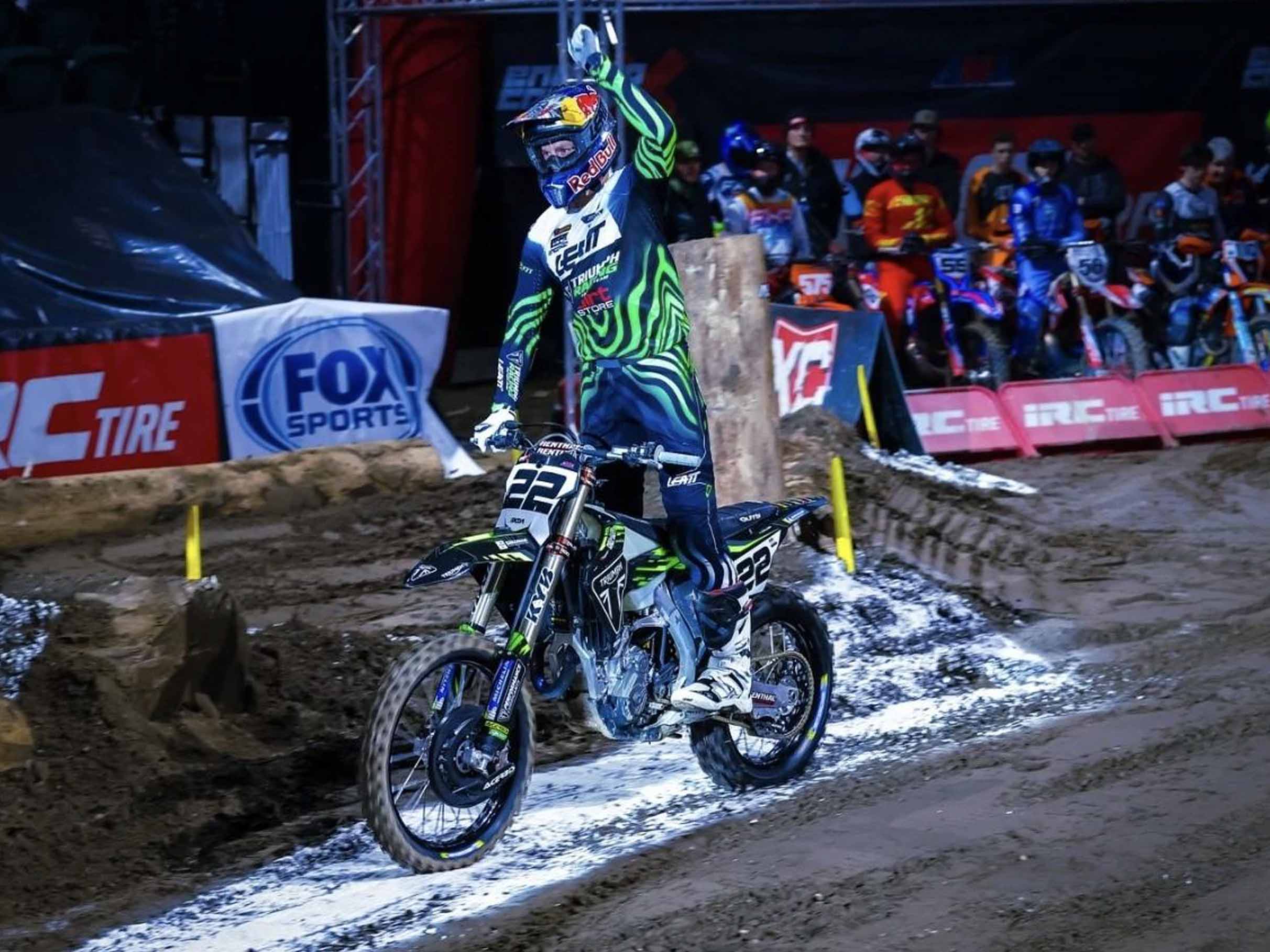
Enduro riding differs from motocross in several ways that affect mousse selection:
A mousse for enduro must balance heat resistance, softness for traction, and durability for distance. Get this balance wrong, and the mousse either overheats and breaks down, or is too stiff to provide adequate traction on technical terrain.
Mousse inserts are available in different density formulations, typically categorized across four levels from ultra soft to hard. Each formulation uses a specific closed-cell foam compound that determines how the mousse compresses under load. We express equivalent air pressure as a reference — a lower bar value means a softer, more compliant feel.
| 硬度 | Pressure Equivalent | おすすめ | Durability | 耐熱性 |
|---|---|---|---|---|
| ウルトラソフト | 0.3バール | Extreme enduro, wet rocks, technical off-road crawling | Lower — fastest wear in technical terrain | Lowest — maximum friction at speed |
| ソフト | 0.5バール | Forest trails, single-track, mixed technical terrain | 中程度 | 低い |
| ミディアム | 0.8バール | Deserts, grasslands, gobi terrain, all-around enduro | Good — balanced life and performance | Good |
| ハード | 1.1 バー | High-speed rally, Baja racing, sustained speed sections | Excellent — longest lifespan, 200+ hours | Best — dense foam handles sustained heat |
Ultra Soft mousse (0.3 Bar equivalent) is our softest formulation, designed specifically for extreme enduro where traction on wet rocks and roots is the priority. At crawling speeds over technical obstacles, the ultra-soft compound conforms to irregular surfaces for maximum grip. It wears faster than other densities and is not recommended for high-speed sections or long transfer stages.
Soft mousse (0.5 Bar equivalent) is ideal for forest trail riding and single-track enduro. It provides excellent bump absorption and traction on loose surfaces while lasting longer than ultra soft in mixed conditions. We recommend soft for riders who prioritize feel and grip over maximum mileage.
Medium mousse (0.8 Bar equivalent) is the most versatile option and our highest-volume density. In our testing, medium-density mousse handles mixed terrain well — from open desert to grassland to gobi — and maintains consistent performance over 80–120 hours of riding. For a general-purpose enduro mousse that works across most conditions, this is the specification we recommend for most riders.
Hard mousse (1.1 Bar equivalent) is designed for sustained high-speed riding. If your enduro course includes long fire road transfers, desert sections, or Baja-style racing, the hard compound resists heat breakdown better than any other density. Hard mousse lasts the longest — we have measured usable life over 200 hours in rally applications.
Yes, but the mousse must be matched to the conditions. For long-distance rally events like the Baja 1000 or African Eco Race, we recommend:
The biggest risk in long-distance rally use is heat buildup. Unlike a tube, a mousse cannot release heat through inflation air. The closed-cell foam structure absorbs heat as it compresses and rebounds. Over 6–8 hours of continuous high-speed riding, internal mousse temperature can exceed 120°C (248°F), which accelerates foam degradation.
To manage heat in rally conditions:
Our rally-spec mousse uses a higher-temperature foam compound rated for sustained operation at 110°C (230°F) with peak tolerance to 140°C (284°F).
All mousse inserts generate heat during use. The question is not whether a mousse overheats, but at what temperature threshold the foam begins to break down.
Signs of mousse overheating:
Our lab test data on mousse operating temperatures:
| コンディション | Speed Range | Internal Temp (Typical) | リスクレベル |
|---|---|---|---|
| Extreme enduro (crawling) | 5–20 km/h | 50–70°C | 低い |
| Single-track enduro | 20–50 km/h | 60-85°C | Low–Moderate |
| Desert/rally racing | 80–120+ km/h | 90–120°C | 高い |
| Overheated (failure imminent) | Any | 130°C+ | クリティカル |
For purchasing managers: the specification to look for is the maximum sustained operating temperature of the mousse compound. Standard mousse foam typically rates for 80–100°C sustained. Our Motobike Más mousse is formulated for 110°C sustained with a 140°C peak.
To minimize overheating risk:
The temperature data published in this guide was collected through controlled laboratory testing at our Tianjin factory R&D center. Each mousse density formulation was tested using the following methodology:
These test methods are derived from ASTM D1056 standard test methods for flexible cellular materials and ISO 5893 rubber testing equipment standards. We publish this methodology to help purchasing managers evaluate our specifications against industry benchmarks.
For a full copy of our test reports, contact our engineering team at info@motobikemas.com. Sample test data is available for qualified B2B buyers under NDA.
Extreme enduro — events like Erzbergrodeo, Romaniacs, and Tough One — is where mousse inserts outperform tubes and Tubliss systems most clearly.
Why mousse wins in extreme enduro:
The trade-off in extreme enduro is that softer, technical terrain requires a softer mousse compound than what most general-purpose mousse inserts offer. Standard medium mousse can feel too stiff on wet roots and rock faces, reducing traction.
Our recommendation for extreme enduro:
| ライディング・タイプ | Recommended Hardness | Expected Life | Key Priority |
|---|---|---|---|
| Extreme enduro (Erzberg, Romaniacs) | Soft front / Soft–medium rear | 40~60時間 | Pinch-flat protection |
| Hard enduro (single-track, technical) | Soft–medium | 60–80 hours | Traction on rocks/roots |
| Classic enduro (mixed terrain) | ミディアム | 80~120時間 | All-around balance |
| Hare scrambles / GNCC | ミディアム | 60–80 hours | Heat management |
| ラリー/砂漠レース | Hard rear / Medium front | 120–200 hours | Heat resistance |
| Dual sport / adventure | ミディアム | 100–150 hours | Longevity |
For purchasing managers and distributors selecting mousse inventory:
How long does an enduro mousse last?
Depending on density and conditions, between 40 hours (soft, extreme use) and 200 hours (hard, rally use). Medium-density mousse in mixed terrain typically delivers 80–120 hours.
レース後にムースを再利用できますか?
Yes, if it has not exceeded its thermal limits. Check for crumbling, white residue, or soft spots. If the foam feels uniformly firm and shows no signs of breakdown, it can be reused.
What is the best mousse for hard enduro?
Soft-density mousse in the front and soft-to-medium in the rear. Pinch-flat protection is the primary concern in hard enduro, which makes mousse the best choice over tubes.
Do pro enduro riders use mousse?
Most pro enduro riders in hard enduro and extreme events use mousse inserts. The consistent performance and flat-proof reliability outweigh the weight penalty.
Is mousse lighter than a tube?
A mousse insert typically weighs 500–900g depending on size, which is slightly heavier than a tube (400–600g). The trade-off is acceptable for the flat-proof benefit.
Can I use motocross mousse for enduro?
Motocross mousse is designed for shorter, higher-intensity use. It will overheat faster in enduro conditions. Use mousse formulated specifically for enduro or rally, with higher heat tolerance.
Manufacturer Disclosure: This guide is published by Motobike Más, a manufacturer of motorcycle mousse inserts and tires. All performance data, temperature specifications, and lifespan estimates reflect testing of our own products conducted at our Tianjin factory. While we believe this data is accurate and reproducible, individual results may vary based on riding conditions, tire fitment, and rider technique. We recommend consulting with our engineering team for application-specific guidance. This content is for informational purposes and does not constitute a warranty or guarantee of performance.
We manufacture enduro mousse inserts at our Tianjin factory with four density formulations optimized for different riding conditions. Our mousse is tested at operating temperatures up to 110°C sustained and is available for OEM, ODM, and wholesale distribution. Contact us for specifications and bulk pricing.
Factory Address: Room 303, Building 2, No. 11 Xihu Road, Nankai District, Tianjin, China
Email: info@motobikemas.com
Annual Capacity: 3,000,000 units
Markets Served: 30+ countries worldwide